NostalGame: StarCraft and the Rise of Competitive Real-Time Strategy
StarCraft arrived in 1998 as a three-race real-time strategy game from Blizzard Entertainment, and it went on to reshape how people played, watched and organized competitive gaming. Drawing on Simon Dor's 2024 study of the game, this retrospective looks at the design decisions, the Battle.net infrastructure and the community tools that made StarCraft the unlikely foundation of an esport, especially in South Korea.
 admin
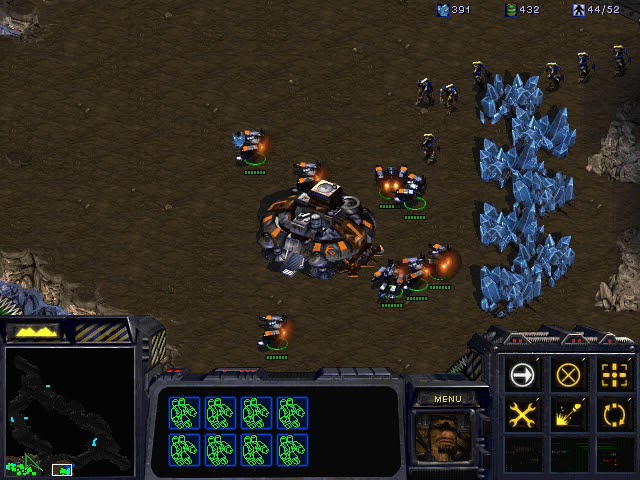
In 1998, real-time strategy was already a settled genre. Dune II had established the template, Command & Conquer had made it mainstream, and Age of Empires was pushing it toward historical scale. Into that field came StarCraft, a Blizzard Entertainment game that put the player in command of three extraterrestrial races competing for resources, terrain and power. On paper it was another entry in a crowded category. What happened next was not on the design document.
Simon Dor's 2024 book StarCraft: Legacy of the Real-Time Strategy, published by University of Michigan Press, treats the game as a case study in unintended consequences. Dor's central argument is that StarCraft was not designed as an esport. Its competitive life emerged from the way it was built and the way its community used it, and the book traces two competencies the game rewarded: decoding and foreseeing ¹. Those are useful words for what StarCraft asked of players. Decoding meant reading the opponent's intentions from incomplete information; foreseeing meant projecting a plan forward and anticipating how it would meet resistance. A game that rewarded those habits could sustain competition long after its campaign was finished.
The book situates StarCraft within the 1990s RTS lineage, comparing its visual style, narrative tropes and control scheme with Dune II, Command & Conquer and Age of Empires. That context matters because StarCraft's differences were not only aesthetic. Its three asymmetrical races gave players genuinely distinct toolkits, and that asymmetry multiplied the number of matchups a competitive player had to learn. Dor also identifies the conditions that let the game grow: design decisions, technological infrastructure, and a strong contribution from the gaming community through Battle.net and the campaign editor. Battle.net gave players a way to find opponents beyond a LAN party, and the editor gave them a way to build things Blizzard had not. Neither was unique to StarCraft in isolation, but together they turned a retail game into a platform.
The most consequential outcome was geographic. According to Dor, StarCraft's role in developing foreseeing skills helped give rise to one of the earliest esport communities in South Korea. That community did not wait for a corporate league to hand it structure. Dor describes clusters of competitive players forming the first tournaments and professionalizing gaming, and he argues that the game was key to the transition toward foreseeing play and essential to competitive gaming and esports. The causal chain is worth stating carefully: the sources establish that StarCraft was not designed as an esport and that its community helped build early competitive structures. They do not offer a single explanation for why South Korea in particular became the epicenter, and this article will not invent one. What the record supports is that the game's competitive culture took root there earlier and more intensely than anywhere else.
For players of the era, the appeal was partly mechanical and partly social. A match was a contest of information as much as armies: scouting, anticipating a build order, and committing to a plan before you could see how it would land. The campaign editor extended that logic into creation. Custom maps and scenarios became their own tradition, a place where players tested ideas the base game did not include. Dor treats the editor and Battle.net as necessary conditions for the flexibility the game needed to keep growing, which is a polite way of saying the community did much of the long-term work.
It is tempting to read StarCraft's history backward, as if a competitive future were inevitable. Dor's account resists that. The game was a landmark, but its landmark status came from an unanticipated effect rather than a planned one. The same year produced other genre landmarks, and none of them produced quite the same competitive ecosystem. The difference was the combination: asymmetrical races that rewarded study, online infrastructure that made practice easy, tools that let the community extend the game, and players willing to organize themselves into tournaments before there was an industry to join.
That combination is why StarCraft still matters to anyone interested in how competitive gaming became a culture rather than a niche. It is also why the game sits comfortably beside the other turning points in this series. The arena shooter found its competitive identity in Quake III Arena, and the mod scene found its template in Warcraft III, but StarCraft got there first with a genre that seemed, at the time, an unlikely candidate for spectators and professionals. Dor's book makes the case that the game's legacy is not just a list of tournaments but a shift in how players thought about play itself: less about reacting to what is on screen, more about predicting what will be there next.
What remains unconfirmed in the sources is the granular detail that a modern reader might want: exact tournament dates, prize figures, player names, sales numbers and the specific mechanics of the South Korean scene's early years. Dor's study is the authority here, and this retrospective does not fill those gaps with guesswork. The broad shape, though, is clear enough. A 1998 real-time strategy game about three alien races became, without intending to, one of the foundations of competitive gaming, and the reason was as much about what its community built around it as what Blizzard shipped on the disc.
Sources