Digital Privacy Settings After a Platform Policy Change: What Actually Changes and What to Check
When a platform rewrites its privacy policy, the settings you relied on can change meaning without changing name — or disappear outright. This explainer breaks down the three different kinds of control that hide behind a single toggle, using Meta's removal of its off-platform activity opt-out as a worked example, and lays out a practical audit you can run before the next policy update lands.
 admin
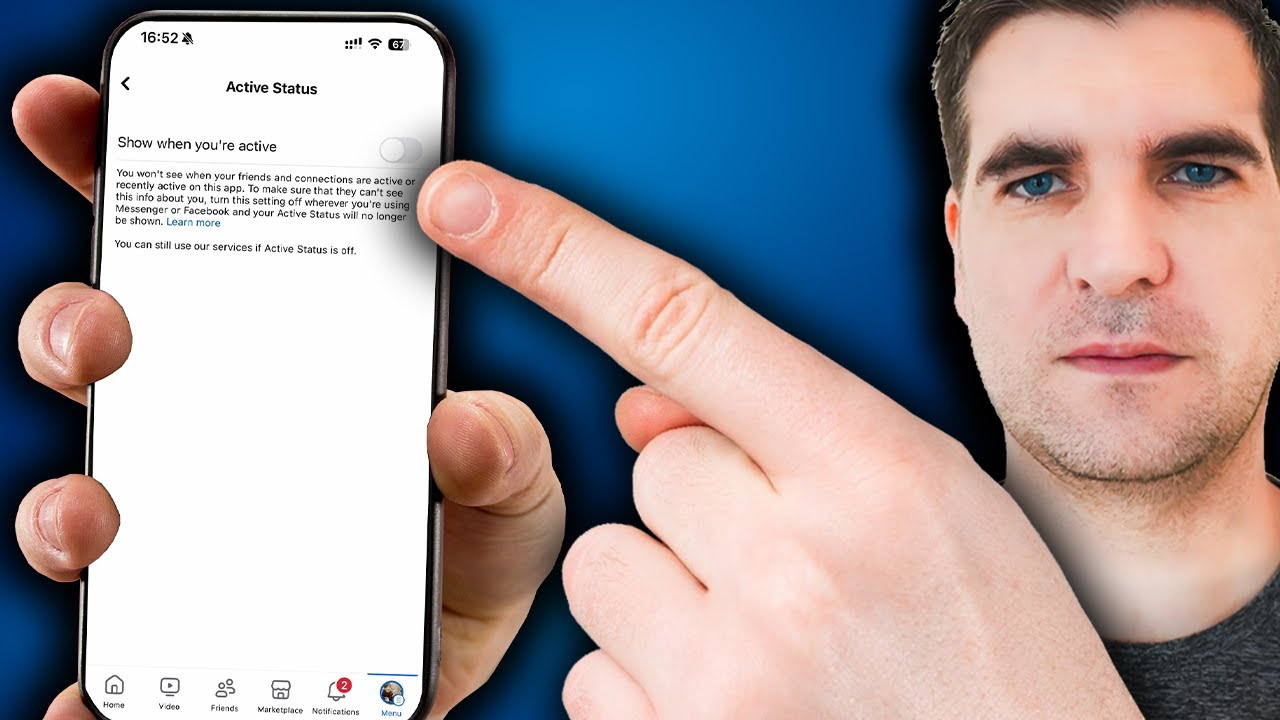
A privacy setting is not a promise. It is a permission slip that describes, at one moment in time, what a company says it will do with your data. When the policy behind that setting changes, the permission slip can be rewritten — or quietly withdrawn — while the interface still looks familiar. That is why the useful question after any platform policy change is not "did they add a new toggle?" but "which of my controls lost power?"
Three kinds of control
Most social platforms bundle several distinct powers into what looks like a single privacy choice. Untangling them is the first step.
The strongest is a connection control: whether data flows from one place to another at all. If a retailer shares purchase data with an ad platform, a connection control lets you sever that link so the platform never receives the record.
The second is a use control: the data still arrives, but you limit what it may be used for — ad personalization, feed ranking, or training and grounding AI features.
The third covers visibility, retention and portability: who can see a post, how long something is stored, and whether you can export or delete it. These are usually the settings people check first and the ones least affected by policy changes.
A policy update is dangerous precisely because it can slide a control down that ladder while leaving the label intact. An opt-out that used to mean "disconnect me" becomes a switch that means "don't personalize ads with this."
The Meta example
That is roughly what happened in Meta's case, according to a July 2026 report from a digital marketing outlet tracking the change ¹. The setting "Your activity off Meta technologies," which since 2020 had let users disconnect data that businesses sent to Facebook and Instagram through the Pixel and the Conversions API, was removed. It was replaced by "Activity from other businesses," which governs how that incoming data is used — for ad personalization, feed recommendations and Meta AI responses — but no longer lets a user prevent the connection itself. The report says the change began with a first wave of markets including Brazil, the United States and the United Kingdom, with the European Union excluded from that wave because of GDPR requirements. Timelines for other regions are not established by the report.
The advertiser-side consequence is the clearest illustration of the concept. Users who had opted out previously vanished from remarketing audiences built on Pixel or Conversions API data. Under the new arrangement, that gap closes: the data flows again, and the only lever left is what the platform may do with it.
Note the framing bias in the source: it is written for advertisers, so it treats a larger addressable audience as the headline. For a user, the same fact reads differently — a disconnection right has been converted into a usage preference. Both descriptions are accurate; only the framing differs.
The practical lesson generalizes. When a policy notice lands, look for the verb. Words like "connect," "share," "retain" and "combine" describe data movement. Words like "personalize," "improve" and "recommend" describe use. A change from the first category to the second is a downgrade in control, even when the replacement toggle sits in the same place on the same page.
An audit you can run
You do not need to wait for a notification to check your exposure. A short, repeatable audit catches most of it.
Start with an inventory: every account you still care about, plus any you have forgotten. Then, per account, open the section that lists connected third-party apps and websites, and revoke anything you do not recognize or no longer use. Deleting an app from your phone does not revoke the permission it was granted; that grant lives on the platform, not the device.
Next, separate account-level controls from device-level and browser-level ones. Ad blockers, tracking-protection modes and separate browser profiles reduce what gets emitted in the first place. Platform settings only govern what happens after the data arrives. They are complementary, and the emission side is the one a third party cannot quietly renegotiate.
Then check your export and deletion options and actually file a request if you want a baseline. Take dated screenshots of the settings you rely on. Defaults shift between interface revisions, and a record of what you chose is the only way to notice that a choice was reversed.
Some of this can be automated. A 2023 patent application describes a system that keeps a list of protected accounts, derives a privacy configuration from user-defined rules, reads current status indicators through an existing login session without handling the password, and applies updated settings automatically ². It is a description of a design, not a shipping product, and it does not solve the underlying problem — any automation is only as good as the settings the platform still offers.
Where the controls stop
Privacy settings manage your account. They do not manage other people's uploads of you, records a data broker already bought, or inference drawn from patterns across many users. Nor do they always prevent matching: an email address or phone number shared by a business can re-associate you with a profile even after you clear a cookie.
That is the case for treating configuration as a second line of defense rather than the first. Reducing what you emit — declining logins you do not need, using separate identities for shopping and social, blocking tracking scripts — narrows the surface area that any future policy change can act on. The same logic drives the trade-offs in Local AI vs Cloud AI, where keeping processing on your own machine changes who holds the data rather than merely what they promise to do with it.
A standing habit
Policy changes are routine, not exceptional, and each one is a small renegotiation of terms you never explicitly agreed to a second time. The durable habit is to read change notices for data-movement verbs, assume that any control you depend on may be redefined, and keep at least one layer of protection that does not live inside the platform's settings page. Where you have legal rights — GDPR in the EU, for instance — those remain a separate channel, and the fact that a market was carved out of a rollout is a reminder that the same account can mean different things depending on where it is registered.
Sources