Handheld PC vs Gaming Laptop: Which Wins for Portable Play?
Handheld gaming PCs and gaming laptops both promise PC games away from your desk, but they solve very different problems. This comparison looks at portability, performance-per-watt, screen size, ergonomics, upgrade paths, and cost so you can pick the one that matches how you actually play. The short version: handhelds win on convenience and price of entry, laptops win on flexibility and big-screen play, and a dock changes the maths for both.
 admin
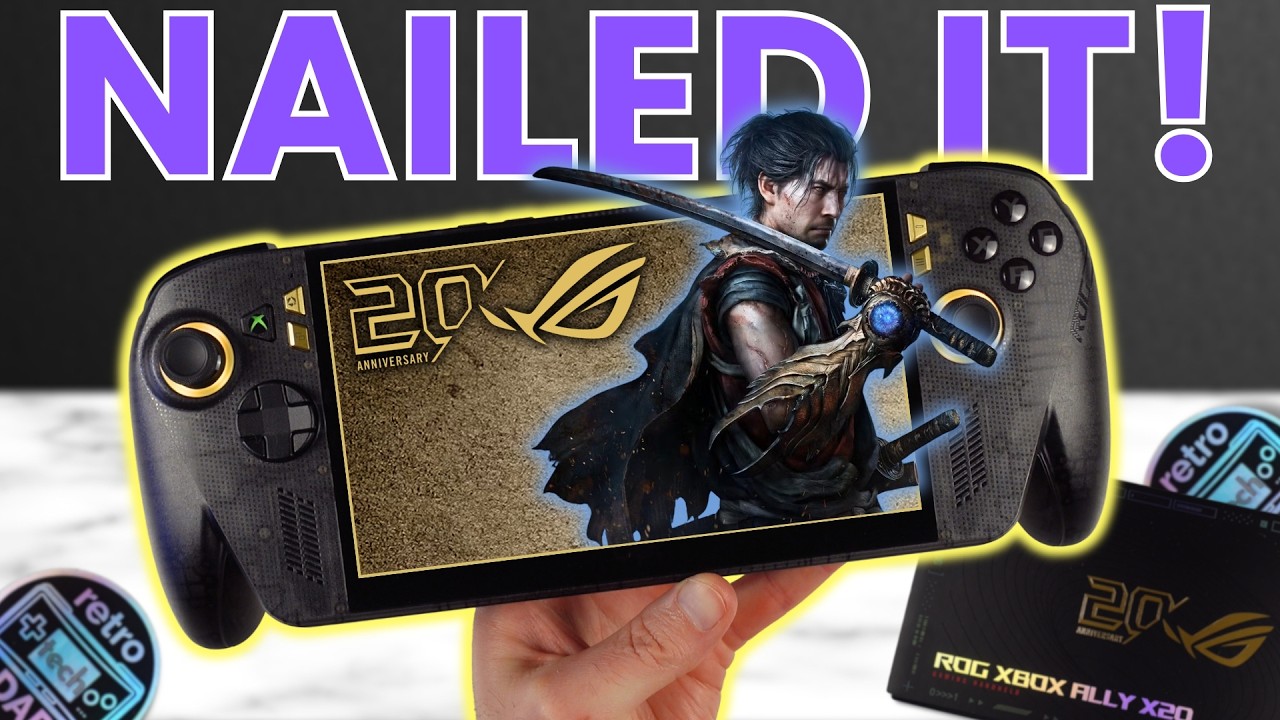
Portable gaming used to mean one thing: a laptop you folded shut and carried to another room, another building, or another country. Handheld gaming PCs broke that assumption. Since the Steam Deck popularised the category, devices running either SteamOS or Windows 11 have shown that a lot of PC games do not actually need a desk, a mouse, or a 15-inch panel to be enjoyable. That does not make laptops obsolete, but it does mean the choice now depends far more on how and where you play than on raw specifications.
Two different kinds of portable
A gaming laptop is a desktop workstation that folds. It carries a keyboard, a trackpad, a screen, and a battery big enough to keep a discrete GPU fed for a while, and it asks for a flat surface and a power outlet in exchange. Open it on a train tray table and you are immediately negotiating with the person in front of you. Play a strategy game or an online shooter and you will want a mouse, which means a mouse surface as well.
A handheld is a controller with a computer attached. It runs on battery, suspends and resumes rather than shutting down, and needs nothing but your hands. There is no setup ritual: press the power button, resume, play. That difference sounds trivial until you have done it a few hundred times, and it is the main reason people who own both often reach for the handheld for short sessions.
The trade is obvious in the other direction. A handheld's screen is small, its input is fixed, and its cooling and power budget are tiny compared with a laptop's.
Pixels versus power
The smartest thing about handheld PCs is that they target modest resolutions on purpose. Rendering at roughly 800p to 1080p on a seven- or eight-inch display looks perfectly sharp at arm's length, and it dramatically reduces the work the integrated GPU has to do. Modern demanding games become playable through a combination of low-to-medium settings, upscaling technology such as FSR or XeSS, and frame-rate caps. None of that delivers the visual fidelity of a laptop with a discrete GPU running at 1440p or higher, and no handheld reviewer would claim otherwise.
Laptops therefore still hold a clear advantage for anything that depends on a large field of view or fine detail: competitive shooters, real-time strategy, simulation, and demanding single-player titles you want to see at their best. They also hold an advantage for multitasking, since a laptop can be a workstation by day and a games machine by night.
Conversely, experiences built around a controller, especially roguelikes, platformers, racing games, and anything with a strong handheld heritage, often feel better on a handheld than at a desk. That is not a technical claim so much as an ergonomic one, and it is a point handheld advocates make repeatedly.
Value and upgradeability
Price is where handhelds get interesting. The entry model of the Steam Deck has been priced at $399, a figure that has no real equivalent among gaming laptops capable of running the same library ¹. Handhelds also sidestep one of the laptop's structural weaknesses: you pay a premium for thinness, and the cooling and power delivery required to fit a discrete GPU into a slim chassis are exactly where laptop prices climb fastest. Anyone weighing that premium against a desktop should read our breakdown of Gaming Laptop vs Desktop PC, because the same logic applies even more sharply to handhelds.
Neither format is a good upgrade platform, however. Most handhelds solder their memory, and while storage is usually replaceable, there is no path to a faster GPU. Laptops are somewhat better, with serviceable RAM and SSDs on many models, but the GPU is still fixed for life. If upgradability matters, you are looking at a desktop.
One recurring argument in favour of handhelds is timing: when memory prices rise, laptop and prebuilt prices rise with them, which makes a cheaper handheld comparatively more attractive ¹. That is a market observation rather than a permanent law, and buyers should check current pricing rather than assume it holds.
Software, docks, and the Windows question
SteamOS handhelds are the most console-like experience in this category: suspend and resume are reliable, the interface is controller-first, and updates are largely invisible. Windows handhelds from Asus, Lenovo, MSI, and others offer broader compatibility with storefronts and anti-cheat-protected multiplayer games, but the desktop operating system was never designed for a gamepad, and sleep behaviour has been a persistent complaint across generations. Software has improved, yet it remains the biggest practical difference between the two camps.
A dock changes the calculation. Plugging a handheld into a TV or monitor with a controller gives you a makeshift console for couch play and light desktop use, which narrows the gap with a laptop for entertainment purposes. It does not close it for productivity or competitive gaming, and a dock, keyboard, and mouse add cost and clutter.
How to choose
Buy the handheld if portability means playing in short bursts, on commutes, in bed, or wherever you happen to be, and if you accept medium settings and a small screen. It is the cheaper way into PC gaming, the faster way to start playing, and the more comfortable way to play with a controller.
Buy the gaming laptop if you need one machine for work and play, if you want a large high-refresh display and a real keyboard, or if the games you care about need more GPU headroom than a handheld can provide. The laptop remains the more versatile portable computer; the handheld is simply the more portable games machine, and for a growing number of players that is the only specification that matters.