NostalTech: The Sony Walkman and the Birth of Private Listening
Before the MP3 player, the Sony Walkman turned music from a shared, room-filling experience into a private one you carried on your belt. This NostalTech retrospective looks at what the cassette Walkman was, why its awkward hardware still reshaped how people listened, and what the era of tapes, batteries and manual track changes can still teach us about convenience and attention.
 admin
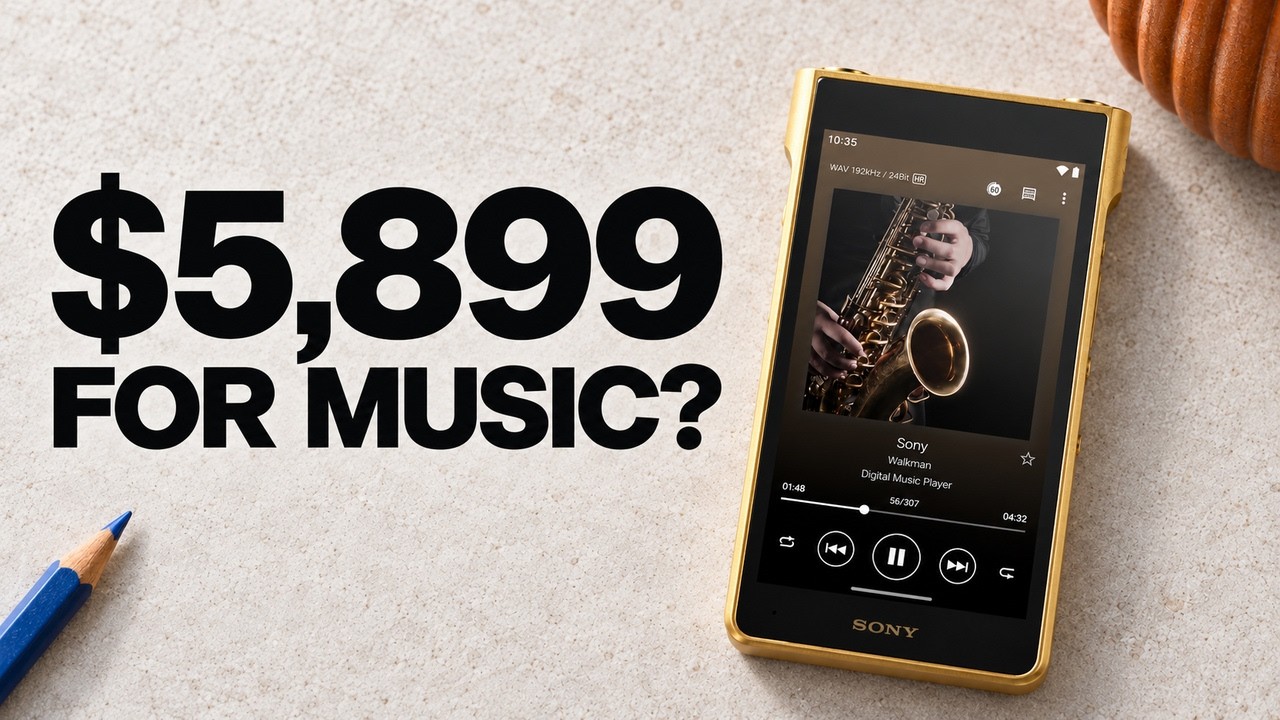
Before the smartphone turned every commute into a private screening room, there was a much humbler object clipped to a belt: the Sony Walkman. It was not the first portable audio device, but it was arguably the first designed around a single, quietly radical idea — that one person, in a crowd, should be able to choose exactly what to hear. That shift is the reason the Walkman belongs in any honest history of personal technology, and the reason it still feels relevant now.
A Social Act Becomes a Private One
For most of the twentieth century, listening to recorded music was a shared activity. Handheld transistor radios had been around since the 1950s, but as TechSpot's history of the device notes, they did not let a listener pick specific songs ¹. Even the earliest portable cassette players were closer to suitcase-sized boomboxes with stereo speakers than to anything you could slip into a pocket. Music came out of a room, not out of a person.
Sony's own path to changing that started with a practical inconvenience. In 1978 the company released the laptop-sized TC-D5 stereo cassette player, and co-founder Masaru Ibuka reportedly carried one on flights to listen through headphones. The idea that followed — take the Pressman handheld cassette recorder released the same year and strip it down for playback — is the origin story TechSpot traces for the Walkman. The precise engineering decisions and model numbers of that first unit are not established in the sources available here, so they are best left unstated rather than guessed at.
What the sources do establish is the cultural consequence. The Walkman was the first device built for private music listening, and it arrived well before the same possibility existed for movies, e-books or video games. That timing matters. Long before streaming made any album available on demand, a person could walk down a street with a soundtrack of their own choosing, and the rest of the world could be none the wiser.
The Awkwardness Was Part of It
It would be easy to romanticize the Walkman into a flawless icon, and the record does not support that. The Guardian's Caroline Sullivan, writing in 2010 as Sony was finally retiring the cassette Walkman, remembered the device as chunky enough that it had to be worn clipped to a belt — where it would periodically unclip itself and crash to the ground, batteries scattering ². Portability, in other words, was a promise the hardware only partly kept.
The "software" was the bigger limitation. A cassette held at most 90 minutes of music and had to be changed by hand, so keeping the music going meant carrying a bagful of tapes and spare batteries. Sullivan's point is sharper than mere nostalgia: because a Walkman was not something you absent-mindedly tossed in a bag alongside your keys, you did not see one on every bus. The iPod's capacity for thousands of songs, and the idea of music as a perpetual soundtrack, were still years away.
That friction is exactly what makes the era instructive. The Walkman proved the demand for private, portable listening before the technology could satisfy it gracefully. The MP3 player, and later the phone, did not invent that desire — they removed the obstacles that had been standing in its way. Anyone who has followed the lineage from cassette decks to the Creative Nomad Jukebox can see the same pattern: the wish comes first, and the hardware spends years catching up.
The Object as a Shared Memory
Part of why the Walkman endures as a cultural reference is that it left behind physical rituals, not just a listening habit. Amanda Krause, writing for Oxford University Press's blog in 2012, opened with a viral image of a cassette tape and a pencil and the line that "our children will never know the link between the two" ³. The joke works because the connection was purely mechanical — a pencil, or a finger, was how you wound a slack tape back into its shell. It is the kind of knowledge that dies with a format.
Krause's broader point is that the Walkman transformed listening itself, changing where, when and with whom music was heard. That is a useful frame for a modern reader. We tend to measure old technology by its specifications, and by that measure the cassette Walkman loses badly to a phone. But its real contribution was behavioral: it normalized the idea that audio is personal, portable and selectable, and it made a generation comfortable with headphones as a kind of social boundary.
The objections were familiar, too. The Walkman was accused of fostering detachment and isolation, even as it created new ways for people to connect around music. Substitute earbuds for a cassette player and the complaint barely changes. That is less a sign that the Walkman was ahead of its time than a reminder that every personal audio device inherits the same argument.
What the Tape Era Still Teaches
The cassette Walkman is gone as a product line, and no amount of nostalgia will bring back its hiss or its belt-clip casualties. What survives is a set of lessons that apply directly to the devices we carry now. Convenience is not the same as capability: the Walkman was capable of private listening long before it was convenient, and the gap between those two things is where most of the frustration of early technology lives. Constraints shape behavior: a 90-minute tape forced choices, sequencing and attention in a way that an infinite library does not. And the social debate around headphones is not new — it started the moment music stopped being a room and became a pair of ears.
A modern reader does not need to own a Walkman to feel its influence. Every time a pair of earbuds signals "not now" to the person sitting nearby, the logic of that first private music player is still running. The hardware got smaller, the library got enormous, and the argument about isolation never really ended. The Walkman simply got there first.
Sources
- ¹ Sony Walkman: The First Personal Entertainer - Serving tech enthusiasts for over 25 years www.techspot.com
- ² Rewinding to the age of the Sony Walkman | Caroline Sullivan - They were never handy enough to be as ubiquitous as MP3 players – yet cassette Walkmen reshaped how music was heard www.theguardian.com
- ³ The transformation of listening with the Walkman blog.oup.com