NostalTech: How the Game Boy Made Battery Life the Killer Feature
The original Game Boy launched in Japan in April 1989 with a monochrome, unlit screen and modest hardware, yet it outsold technically superior color rivals. Its design followed Gunpei Yokoi's philosophy of "lateral thinking with withered technology," prioritizing battery life, price and reliability over raw specs. That trade-off remains the central lesson for every battery-powered handheld built since.
 admin
In April 1989, the original Game Boy went on sale in Japan, and three months later it reached the United States ¹. On paper, it looked like a step backward. The screen was monochrome and low-resolution, it had no backlight, and the single speaker was nothing to boast about. Contemporary press, according to NeoTeo's account of the machine's engineering, had expected something closer to a miniature NES, and the gap between that expectation and the actual device was obvious at launch.
Yet that modest device went on to sell more than a hundred million units and beat competitors whose hardware was technically superior. The explanation is not nostalgia. It is a design philosophy, and it is the reason the Game Boy still matters to anyone building a battery-powered computer today.
Withered Technology, Sharp Thinking
Nintendo's chief engineer Gunpei Yokoi built the Game Boy around an idea usually translated as "lateral thinking with withered technology." The phrase sounds like an insult to the hardware, but the intent was the opposite: rather than chase the newest and most expensive components, Yokoi favored mature, cheap, well-understood parts whose behavior was predictable. Cutting-edge silicon drains power, runs hot and costs money. Mature silicon does none of those things particularly badly, and that predictability is exactly what a portable device needs.
The result was a console that was not the most capable in its class but was the easiest to live with. A monochrome screen without a backlight was a cost and power decision as much as a technological limit; so was the conservative processor. Every compromise on the spec sheet bought something the buyer would feel in daily use — a lower price and, above all, longer play between battery changes.
What the Rivals Got Wrong
The competitive lesson is the sharpest part of the story. Rivals with color screens and stronger chips lost to a machine that looked weaker on every line of a spec comparison. That outcome is a useful corrective to the way enthusiasts often talk about hardware: the best-specified device is not automatically the one people carry around. A handheld lives in a bag, gets used in poor light, and runs on cells the owner has to buy. In that context, endurance and price are not secondary features. They are the product.
The NeoTeo piece frames this as turning weaknesses into strengths, and that framing holds up. The Game Boy's limitations were not accidents that happened to work out; they were chosen, and they reinforced each other. A dim screen demanded less power. A simpler chip demanded less power. Less power meant longer battery life, which meant more actual play, which meant more word of mouth. The spec sheet lost and the experience won.
The Battery-Free Echo
The design question the Game Boy posed has not gone away. A 2021 journal article by Jasper de Winkel, Vito Kortbeek, Josiah Hester and Przemysław Pawełczak, published in GetMobile: Mobile Computing and Communications and indexed among academic work on the console, describes a "battery-free Game Boy" — a research device that replaces the battery with energy harvesting while trying not to compromise the user experience ². More than three decades after the original launch, engineers are still working on the same fundamental tension between capability and power that Yokoi resolved with off-the-shelf parts.
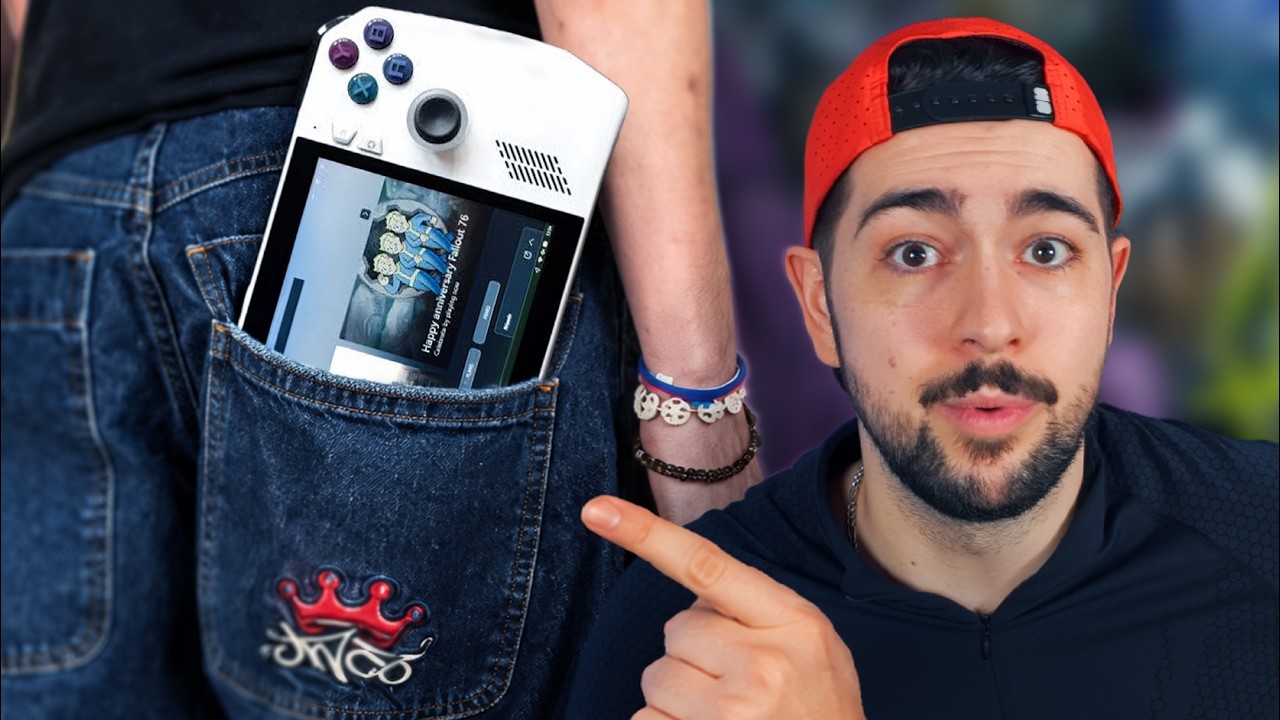
That is the thread connecting 1989 to now. Modern handheld PCs chase frame rates and screen quality, and the trade-offs have grown more complex, but the underlying arithmetic is unchanged: every watt spent on a brighter panel or a faster chip is a watt unavailable to the session. Anyone weighing a handheld PC against a gaming laptop is really asking a version of the Game Boy's question — how much performance is worth carrying, and how long does it need to last away from a socket?
What to Take From It
The Game Boy's lesson is not that weak hardware wins. It is that a portable device is a system of compromises, and the designer's job is to choose which compromises the owner will never notice and which ones they will feel every day. Yokoi chose to make the screen the visible sacrifice and battery life the invisible gift. Buyers rewarded that choice with more than a hundred million sales.
For a modern reader, the takeaway is a habit of mind rather than a buying recommendation: when a battery-powered device is announced, look past the headline specification and ask what it costs in endurance, price and reliability. The Game Boy answered that question in 1989 with mature parts and a clear priority, and it is still the cleanest example of getting the answer right.
Sources