Google Pixel Hardware in Focus: Tensor, Cameras, and Battery Trade-offs
Google's undated Pixel support listings show a hardware strategy built around consistent 16 GB RAM, Tensor processors, Titan M2 security, and camera systems that lean on processing rather than raw megapixel counts alone. Comparing the listed G4 and G5 configurations reveals where Google has held the line and where it has shifted storage, camera, and battery priorities.
 admin
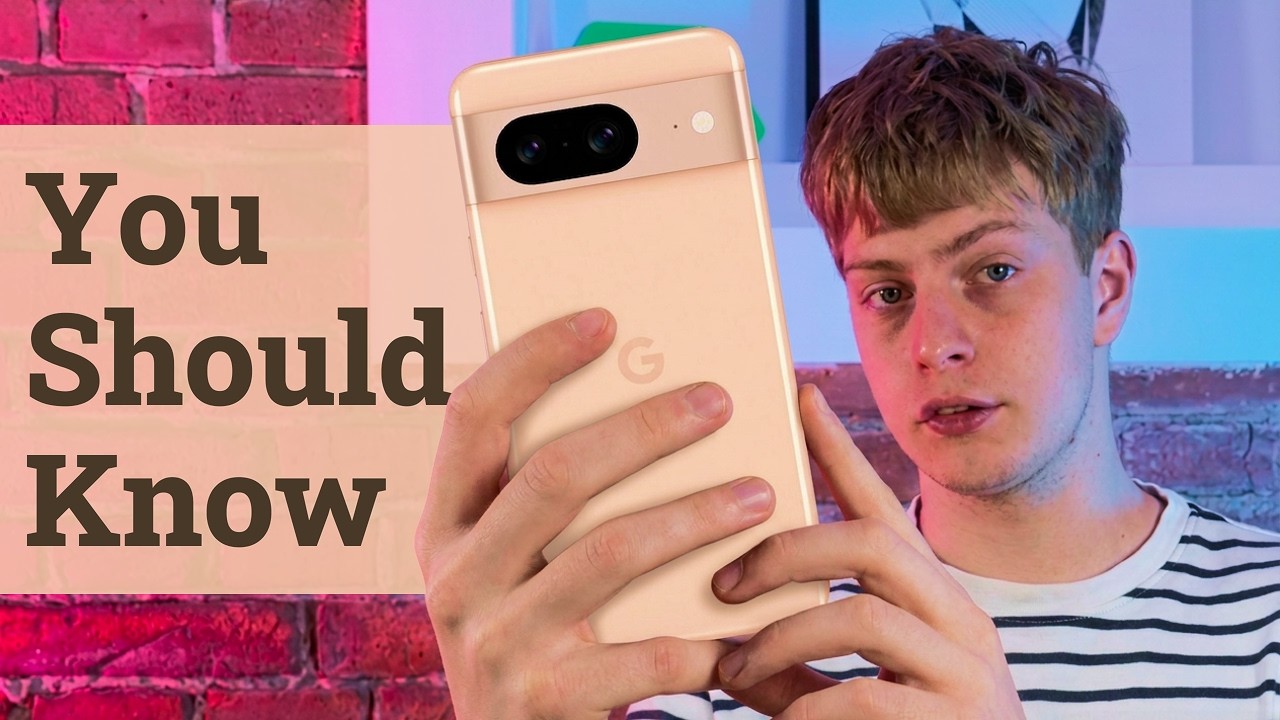
Google Pixel phones are often discussed through the lens of software: clean Android, timely updates, and camera processing that does much of the work behind the scenes. The hardware story matters too, and Google's own spec sheets are a useful way to see the priorities. The undated support listings reviewed here describe two different Pixel hardware configurations, one built on Tensor G4 and another on Tensor G5. The supplied excerpts do not name specific models, so the safest reading is comparative rather than a product-by-product verdict.
The G4 configuration pairs Google Tensor G4 with 16 GB RAM and storage options spanning 128 GB, 256 GB, 512 GB, and 1 TB. Its rear camera system is a triple array: a 50 MP wide camera, a 48 MP ultrawide with macro focus, and a 48 MP 5x telephoto. Google lists Super Res Zoom up to 30x and optical-quality steps at 0.5x, 1x, 2x, 5x, and 10x. Sensor details include a 1/1.31-inch main sensor, a 1/2.55-inch ultrawide, and a 1/2.55-inch telephoto, with laser autofocus and optical stabilization on the wide and telephoto cameras ¹.
The G5 configuration moves to Tensor G5 but keeps 16 GB RAM and raises the starting storage tier to 256 GB, with 512 GB and 1 TB options. Battery capacity is listed at 5,015 mAh typical and 4,919 mAh minimum. Wired charging is rated at up to 50 percent in about 30 minutes with a 30 W USB-C PPS charger or higher, while wireless Pixelsnap charging is Qi2-certified at up to 15 W. The camera array is again three rear cameras, but the mix changes: a 48 MP wide camera, a 10.5 MP ultrawide with macro focus, and a 10.8 MP 5x telephoto. Zoom is listed up to 20x, with optical-quality steps at 0.5x, 1x, 5x, and 10x ².
Two things stand out when the listings are placed side by side. First, memory has not been used as a differentiator: both configurations list 16 GB RAM. Storage does shift, with the G5 listing dropping the 128 GB entry point. That suggests a more premium baseline, but it is an inference from the listed tiers, not a statement about pricing or market positioning. The 1 TB ceiling remains in both, which is notable for a phone line that has sometimes been criticized for trailing rivals on raw storage options.
The camera changes are more interesting than a simple megapixel comparison. The G5 listing's lower-resolution ultrawide and telephoto sensors might look like a step down at first glance, but the spec sheets also show different sensor sizes and apertures. The G4 listing describes larger sensors on its secondary cameras, while the G5 listing uses a different main sensor and a different ultrawide field of view. Megapixels are only one variable; sensor design, lens aperture, stabilization, and image processing all affect the final photo. The honest conclusion is that Google has changed the camera recipe between these configurations, not that one is automatically better based on numbers alone.
Battery and charging details appear in the G5 listing, but the supplied G4 excerpt does not include comparable battery information. That makes a direct battery comparison impossible from these sources. What can be said is that the G5 listing describes a large battery, relatively fast wired charging with the right charger, and Qi2 wireless charging. The charger is listed as sold separately, which is worth noting because fast-charging claims often assume specific accessories.
Security remains a constant theme. Both listings give Titan M2 a prominent role alongside Tensor security core and Trusty, Google's trusted execution environment. Both also mention protections against malware, phishing, and spam. Google's VPN is included at no extra cost in the listings, though availability can vary by country. These are the kinds of features that do not show up in a camera comparison or a benchmark chart, but they are central to Google's pitch for Pixel as a secure, software-first phone.
The overall picture is of a hardware line that does not try to win every spec-sheet line. Instead, Google keeps memory high, gives security a dedicated chip, and iterates camera hardware while leaning on software to close gaps. The G4 and G5 listings show a company willing to change sensor resolutions, storage tiers, and charging standards between configurations. Whether those changes produce better real-world results requires testing, not spec-sheet arithmetic.
Sources
- ¹ Pixel telefonun donanım teknik özellikleri - - Pil Paylaşımı9 support.google.com
- ² Tekniska specifikationer för hårdvaran i Pixel-telefoner - - Normalt 5 015 mAh (minst 4 919 mAh)7 support.google.com