NostalTech: The HP-12C and the Long Life of Programmable Pocket Math
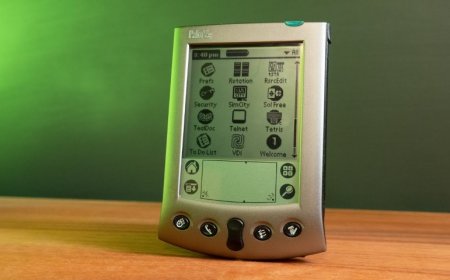
The HP-12C went on sale in September 1981 and, decades later, was still being sold, which makes it a rare case of a computing product that outlived the era that produced it. This NostalTech story looks at what the calculator was, why its reverse-Polish notation and programmability mattered to bankers and other professionals, and what its persistence says about tools that get the interface right.
 admin

In September 1981, Hewlett-Packard put a small financial calculator on sale for $150, roughly $400 in 2016 money. Thirty-five years later, in 2016, it was still on the market at $69.99 — a run that the Cadence blog marked with a birthday post noting it could not think of another electronic product of that age still being sold ¹. The device was the HP-12C, and its longevity is the interesting part. Plenty of machines from that period were clever. Very few stayed on sale long enough to become furniture.
What the 12C was, first, was a financial calculator: a pocket-sized machine built around the calculations that bankers, real-estate people and finance professionals ran constantly — loan payments, interest, cash flows, present and future value. It also used reverse-Polish notation, where you enter the numbers first and the operator afterward, rather than typing an expression the way it is written. The Cadence post calls it the first calculator to use RPN, and adds a wry note that it presumably was not named after the logician Jan Łukasiewicz because nobody could pronounce him. That detail matters more than it looks. RPN was not a gimmick; it was a different way of thinking about arithmetic, and it became the dividing line between people who found the 12C natural and people who found it impenetrable.
The second thing the 12C was, was programmable. The "C" in the name belonged to a family of HP machines sharing a form factor and entry logic but aimed at different users — the Cadence post notes that scientists, engineers and programmers got their own versions, and that the HP-16C handled bitwise logic and conversions between hexadecimal, decimal and octal. The 12C's programs were small by any modern standard, sequences of keystrokes stored and replayed, but that was the point: a calculation you performed every week could become a key you pressed. Pocket programmability in that era was not about general computing. It was about compressing repetitive professional work into a device that fit in a shirt pocket.
Why it mattered at the time is best told through the people who carried it. In an Alphr piece from 2015, Steve Cassidy describes being handed an HP-12C in a cream cardboard box in 1982, with its serial number recorded against his name and the expectation that it would be returned complete if he ever left the bank. He calls it the badge of rank and seal of office for merchant bankers, priced then at £220 — about £1,221 in 2015 money ². The detail that stays with you is his claim that he had seen the 12C's manual quoted, with page and paragraph numbers, in international loan agreement documents worth hundreds of millions of pounds. A calculator manual as a legal reference is an extraordinary thing. It suggests the 12C was not merely a tool people used but a shared standard they appealed to, the way a contract appeals to a definition.
Cassidy's account also captures the social cost of the thing. Getting into the Freemasons, he writes, is a cakewalk compared to mastering the 12C. That is the trade the 12C made: it asked for effort up front and repaid it with speed and precision for someone who ran the same financial calculations all day. RPN rewards practice; programs reward repetition. Neither is friendly to a casual user, and HP did not pretend otherwise. The company, in Cassidy's telling, was content to own the minds and fingers of the top slice of the banking profession rather than chase everyone else.
What the 12C teaches is subtler than "old hardware was durable." The machine survived because its interface was a settled answer to a narrow problem, and because the people who depended on it had no reason to accept a replacement that broke their habits. The Cadence post frames the contrast neatly: in an industry where computers were replaced every couple of years, a product still on sale after 35 years seemed almost comical. But the 12C was not competing with computers. It was competing with the previous 12C, and it kept winning that comparison by not changing.
There is also a programming lesson buried in those keystroke programs. Modern programmable devices hide their logic behind layers of abstraction; the 12C put it in the open, one keypress at a time. To write a program on it was to think about exactly what the machine would do, in order, with no room for vagueness. That is an unusually honest kind of computing, and it is why people who learned on machines like this tend to be suspicious of tools that conceal their own behavior.
What remains genuinely unknown is how many 12Cs HP sold over the decades, and how many are still in daily use. Neither source gives figures, and the Cadence post's estimate that the hardware could not cost more than $5 to $10 to make is the author's guess, not a published cost. What is documented is the span: on sale in September 1981, still listed by HP in 2016, and still remembered in 2015 by a banker who had to give his back if he quit. For a piece of consumer technology, that is an unusual kind of success — not the success of a product that everyone bought, but of one that the right people would not give up.
The modern reader does not need a 12C, and this is not a recommendation to find one. The takeaway is about design: a tool can outlast its generation if it commits fully to the people who rely on it, even at the price of baffling everyone else. The 12C committed. It is still, in a sense, keeping its promise.
Sources